
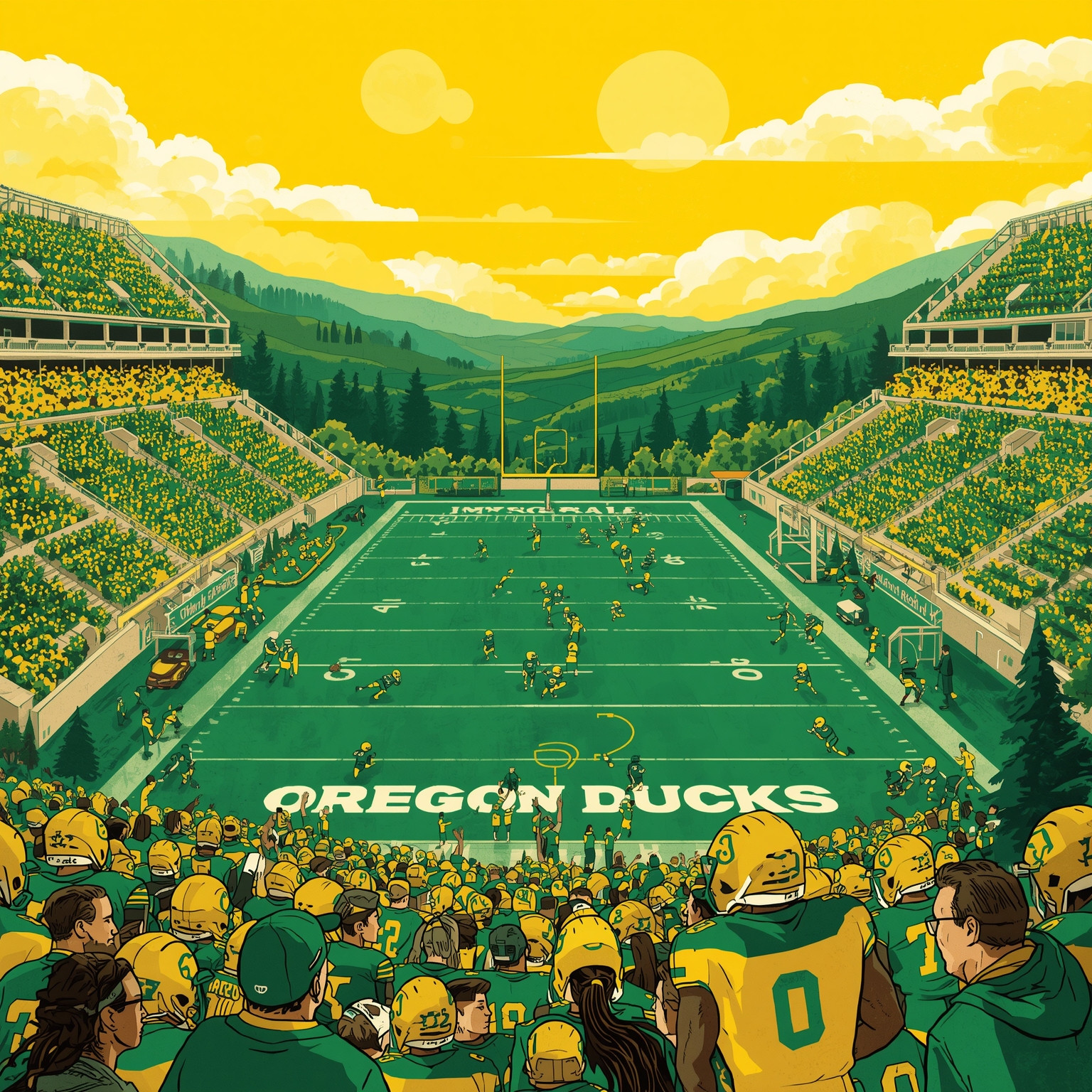
Forecasting a Ducks’ Offensive Breeze in Eugene
The No. 7 Oregon Ducks prepare to host No. 15 USC at Autzen Stadium with clear skies predicted and temperatures in the mid-50s. After thriving in wet conditions earlier this season, the Ducks are looking to capitalize on dry weather to unleash their high-octane offense. In good weather, Oregon has scored 98 points over its last two games, compared to just 39 points when rain appeared. Quarterback Dante Moore set a school completion record (27-30) against Minnesota in optimal conditions, while running backs Noah Whittington and Jordon Davison have established a dynamic ground attack. With only light winds and no rain forecast, the Ducks hope the elements will give them the edge in a game with College Football Playoff implications.
If only weather forecasting were as reliable as coaches promising “this’ll be a calm, low-contact practice.” Ducks staffers have spent more time staring at radar models than game film, evidently because checking the NOAA app is considered advanced strategy. Expect players to suit up in SPF-50 cleats and sunglasses, because nothing says “big game prep” like applying sunscreen in a stadium that’s been perpetually damp for the last decade. In the unlikely event Eugene actually sees rain, they’ll pivot to “rustic Pac-12 style” and blame Mother Nature for any offensive hiccups.
Bear Alexander Roars onto NFL Draft Boards
Defensive lineman Bear Alexander has transformed his career at Oregon after transfers from Georgia and USC. Under coach Dan Lanning, Alexander is recording consistent tackles and tackles for loss—earning praise from Pro Football Network’s Ian Cummings, who ranked him among the top 100 prospects for the 2026 NFL Draft. Alexander posted a season-high six tackles and two stops behind the line against No. 2 Indiana and led the Ducks’ defensive grades in the victory over Penn State. His move to Eugene followed a public fallout with coach Lincoln Riley, and now NFL scouts see Alexander’s disruptive power and improved technique as a blueprint for draft success.
From redshirt drama to NFL dream, Alexander’s journey is proof that sitting on a bench can be a strategic career move—much like taking a knee in practice when you’d rather be running. His transfer saga reads like reality TV: one minute he’s stomping grounds at USC, the next he’s the Ducks’ favorite child. NFL scouts are reportedly tattooing his highlight reels onto their playbooks and praying for more sack footage. Somewhere, Riley is updating his emoji game to include the “face-palm” icon.
Coach Lanning’s Crunch-Time Philosophy: Practice Hard, Hurt Harder?
As Oregon prepares for USC, coach Dan Lanning discusses the fine line between effective contact drills and unnecessary injuries. The Ducks have suffered multiple non-contact injuries this season, leading Lanning to conclude that “teams that practice not to get hurt are the teams that get hurt the most.” He advocates adaptive, smart practice structures—half-line drills, crossover work, limited pileups—to maintain physical readiness while managing risk. With star receiver Dakorien Moore nursing a non-contact knee injury, Oregon evaluates every drill’s contact level and adjusts as the season’s end approaches.
Nothing screams “gridiron genius” like a coach admitting that avoiding hits leads to more hits—who knew? Lanning’s solution is to practice like gladiators without the messy aftermath, presumably by installing padded bubble suits and refereeing practice like a children’s birthday party. His “smart contact” approach is essentially Muscular Minimalism™: get in, hit hard, leave no one else in the pile. It’s a stretching of logic akin to telling fans to cheer quietly so the players can hear each other think.
Leave a Reply