
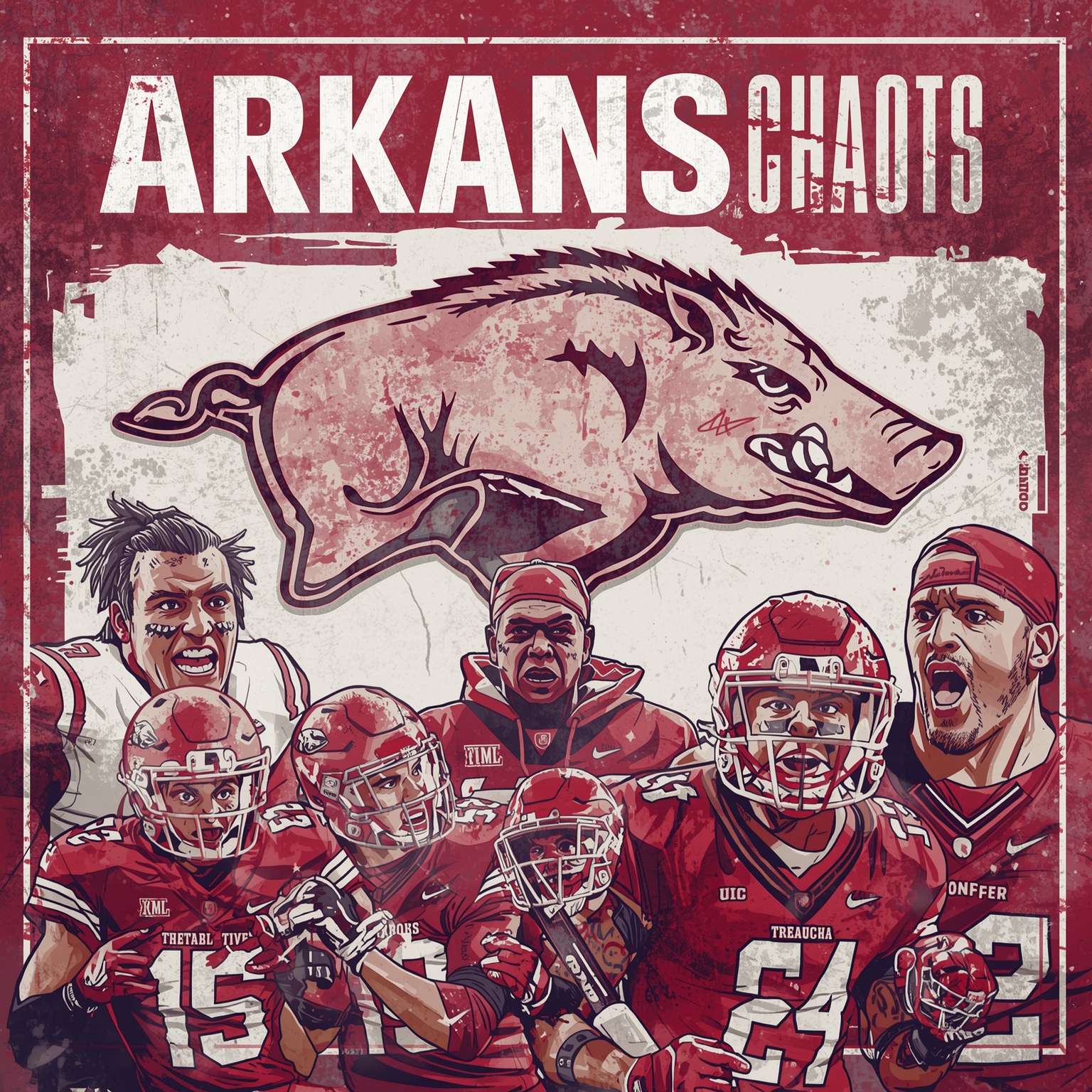
Roberts Unleashes Aggressive Razorback Defense
Arkansas hired Ron Roberts as defensive coordinator to rescue a unit that ranked near the bottom of FBS last season. Facing giveaways and big-yard plays, Roberts and coach Ryan Silverfield prioritized portal recruiting to add pass rushers and interior force players. They retained edge rusher Quincy Rhodes, held onto key freshmen like Keiundre Johnson and Charlie Collins, and brought in a bevy of transfers—Jamonta Waller (Auburn), Steven Soles Jr. (Kentucky), Trajen Odom (Ohio State) among them. With an “odd front” and multiple looks, the goal is sound tackling, run setting, and creating havoc through negative plays and turnovers.
Forget gentle pigs—these Razorbacks are training for Smackdown Sunday. Roberts promises to turn walk-ons into wrecking balls and clueless tackles into highlight reels. If your offense dares cross midfield, you’ll wish you’d stayed home binge-watching paint dry. Recruiting transfers like they’re Pokémon cards, Arkansas is stacking a deck so stacked it might just fall over—preferably on your quarterback. They’re banking on “havoc,” which in coach-speak means “please, offense, kindly fumble for our defense’s amusement.” Popcorn, anyone?
When Basketball Greatness Laughs at Your Spreadsheet
This piece argues that analytical metrics fall short of capturing the true impact of college basketball’s standout freshmen and veteran stars. While advanced stats and NET ratings dominate bracket discussions, they often penalize mid-majors and bubble teams. The eye test remains crucial for understanding game-flow subtleties—how a ball-screen handler shrinks a defender, or a point guard’s poise under pressure. Names like Darius Acuff Jr., AJ Dybantsa, Cam Boozer, and Kingston Flemings illustrate that context, momentum shifts, and spatial awareness can’t be distilled into formulas, especially when mid-majors fight for NCAA bids.
Crunching numbers is so passé—what’s next, factoring in each coach’s caffeine intake? The author pleads with bracketologists to kick spreadsheets to the curb and watch actual games, presumably with rose-colored goggles. Yes, analytics are on notice: your efficiency ratings will be replaced by “vibes” and “gut feelings.” Soon, every upset will be declared “pure emotion,” and sabermetrics will star in a new sitcom with shot-chart puppets. Because nothing says fair tournament selection like ignoring objective data in favor of “feelings.” Bask in the chaos!
Calipari’s Rotating Lineups Survive an Epidemic of Aches
John Calipari’s Arkansas squad has become a weekly puzzle of injuries and lineup gymnastics. From Malique Ewin pushing for more minutes against Nick Pringle to Darius Acuff Jr.’s 49-point outburst in a walking boot, the Razorbacks are fielding bandaged gladiators. Freshmen hobble in boots, big men sport masks, and guards limp back after collisions. Despite all this, Arkansas remains undefeated after seven single-loss rebounds, a testament to resilience amid constant rotation and shifting egos.
Behold the NCAA’s answer to Grey’s Anatomy on the hardwood: one game you need a backup center, next game a pirate mask. Calipari’s clipboard is basically a first-aid kit, and “rest days” are mere suggestions. Rumor has it opponents now carry crutches to the arena for “fair play.” Forget scouting reports—teams now strategize which Razorback is too hurt to play. It’s inspiring, in a B-movie sort of way: swelling, bruising, yet still hitting threes. Who needs consistent rotations when you have sheer grit (and medical tape)?
Leave a Reply