
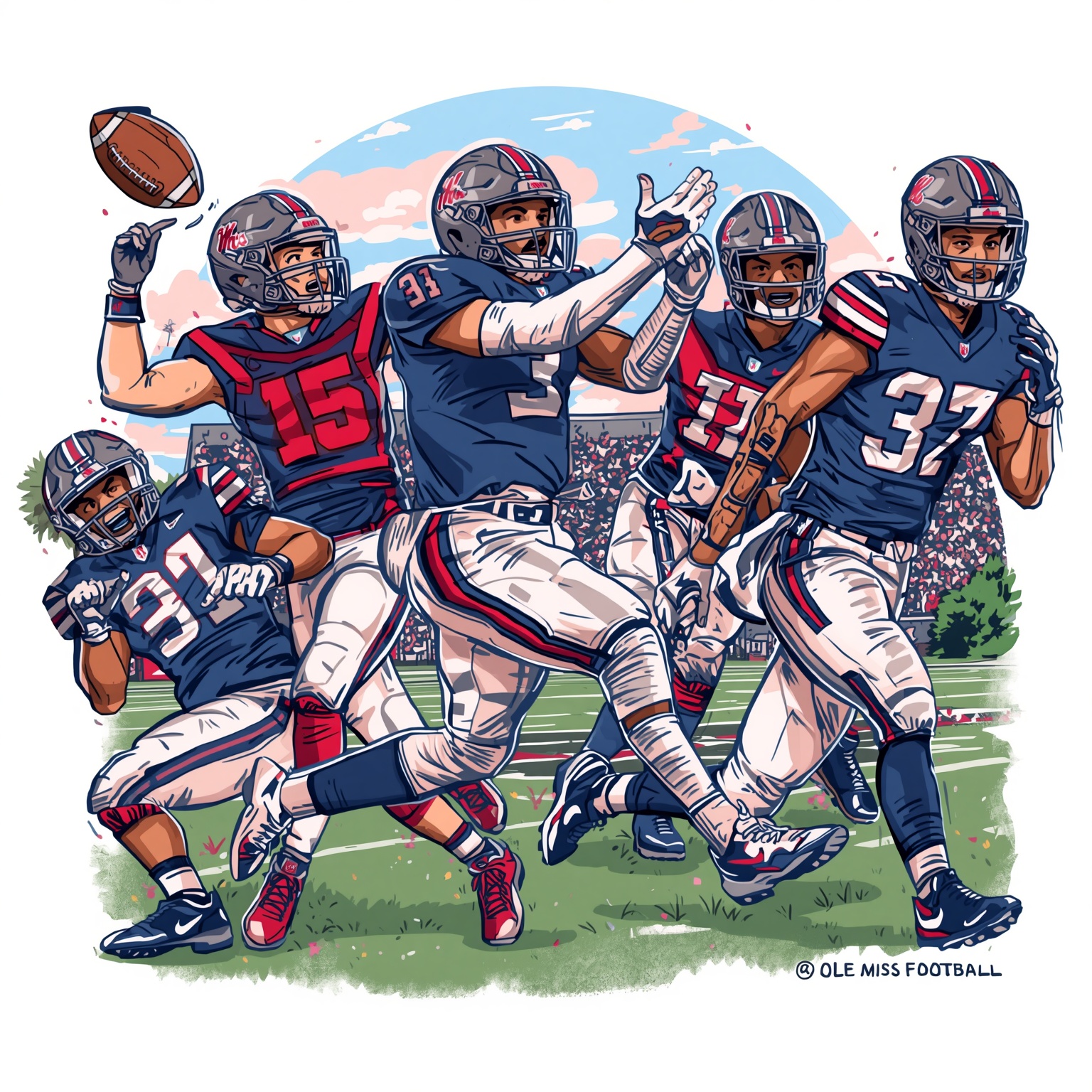
Rebels in a Test Tube: Summer Chemistry 101
As Ole Miss players return for summer workouts, defensive coordinator Pete Golding is focused on more than just sprints and tackles. With a transfer portal class ranked second nationally and key veterans back, the Rebels are spending four days a week drilling seven-on-seven and inside-run periods. The goal is to reinforce communication, build trust and accelerate installation of Pete Golding’s defensive scheme so that by fall camp it feels like the fourth time these reps have been run. Coaches see this summer stretch as vital for leaders to emerge and for potential to turn into on-field cohesion, ahead of high expectations for the season.
Welcome to Rebel Chemistry 2024, where coaches don lab coats, clipboards double as Bunsen burners, and every broken huddle is treated like an unapproved chemical reaction. Rumor has it the wide receivers have started a podcast titled “Molecule Meetings,” and rumor has it the secondary’s secret handshake is actually an encrypted Morse code message. If these summer drills were any more structured, they’d be filing SEC patents on playbook beakers. But hey, if alchemy can turn lead into gold, why can’t scrimmages turn walk-ons into national championship contenders? Grab your safety goggles, Oxford—science is coming to the gridiron.
Rebels Rake In SEC Jewels on the Diamond
Five Ole Miss baseball standouts earned All-SEC nods as the Rebels head into postseason play. Relief ace Walker Hooks claimed First Team honors with a 1.73 ERA and seven saves in conference play. On the Second Team, Will Furniss led the lineup with a .322 batting average and .439 on-base percentage, Cade Townsend delivered three straight quality starts, and slugger Judd Utermark set the school career home run record. Hunter Elliott made the All-Defensive Team, stymieing baserunners with 96 strikeouts, four pickoffs and only five stolen bases allowed over 71 innings.
It seems Ole Miss has started a treasury where baseball talent is the only currency. Hooks is moonlighting as a relief pirate, looting save opportunities, while Furniss is out there playing whack-a-mole with baseballs—only the moles are dead silent in the outfield. Townsend is pitching more gems than a jewelry store, Utermark is the human wrecking ball demolishing pitching staffs, and Elliott is single-handedly enforcing base security like a bouncer at a velvet rope club. If the Rebels bring this treasure chest to Hoover, Alabama, even Midas might feel underpaid.
Manning Magic: Oxford’s Timeless Triumphs
On his birthday, Ole Miss celebrates Archie Manning’s enduring impact through three iconic performances. In a 1969 primetime showdown at Alabama, Manning amassed an SEC-record 540 yards of offense despite a one-point loss. In the 1970 Sugar Bowl, he dazzled with 273 passing yards, 39 rushing yards and a highlight-reel touchdown to topple No. 3 Arkansas. Even a broken arm in 1971 couldn’t stop him; Manning rallied in the Gator Bowl with 180 passing yards and 95 on the ground, nearly engineering a comeback. His grit, improvisation and skill remain cornerstones of quarterback evaluation and development today.
Behold Archie Manning, football’s original pocket sorcerer, who turned defenders into reluctant dance partners and defensive schemes into confetti. Legend says he once threw a pass so pure it cured Monday morning headaches, or at least that’s what the ghost of Johnny Vaught tells recruits. His legacy lives on in the Manning Passing Academy, where aspiring QBs learn the sacred art of “Hail Murray” and “Omaha” incantations. If you listen closely on fall Saturdays, you can still hear Archie’s echo in every perfect spiral—though that might just be the marching band warming up.
Leave a Reply